
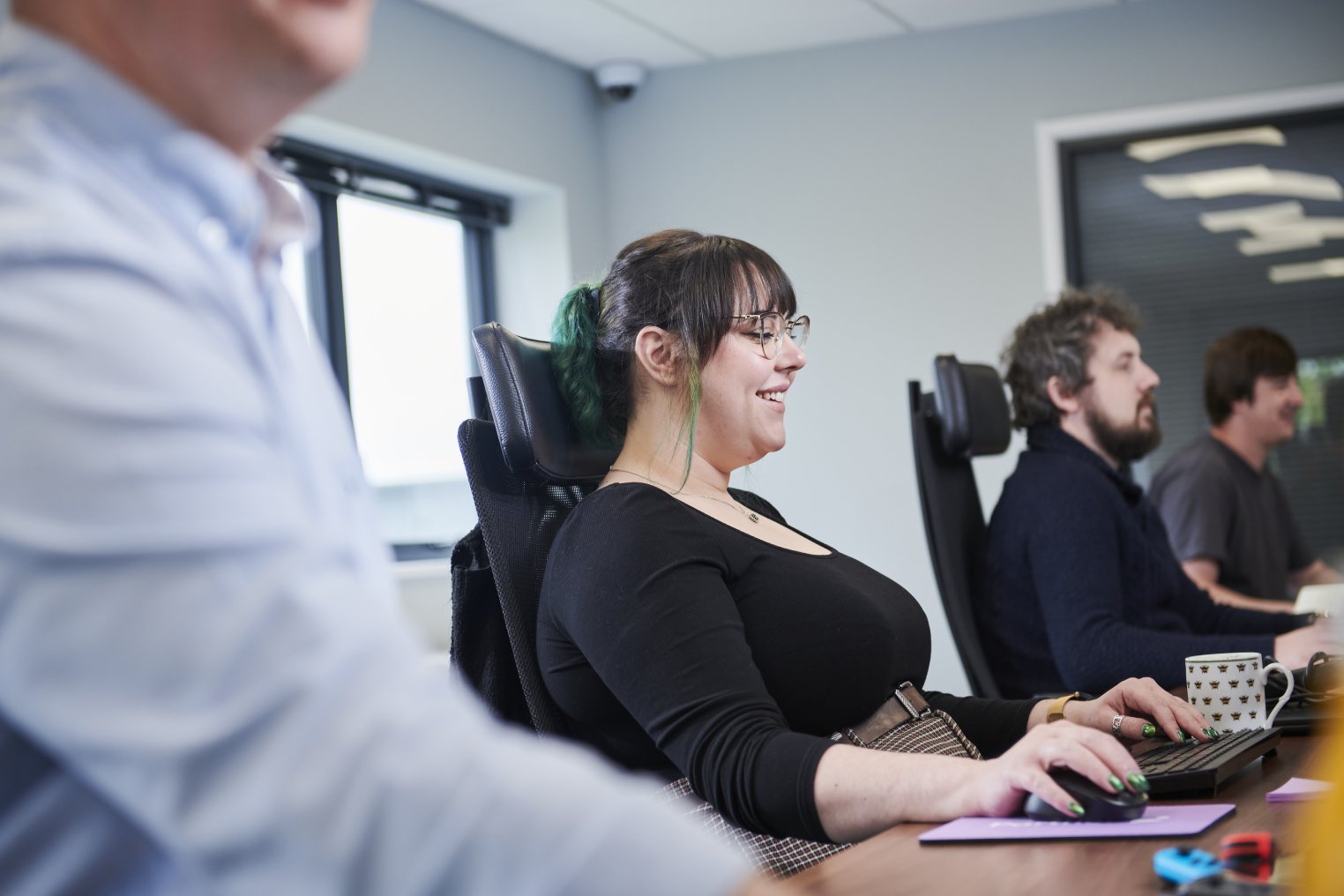
The Subsidium EMM team – a typical day
Most people hear “Enterprise Mobility Management” and imagine it is fairly straightforward.
A device needs an app. A setting needs changing. A customer wants a new feature enabled. On the surface, it sounds straightforward.
In reality, EMM usually becomes complicated the second you touch anything. And behind every change is a much bigger question: how will this affect the rest of the device estate?
That is where our EMM specialist team – including Bradley, Callum, Darius and Sophie – come in.
From app deployment requests and troubleshooting device issues to building environments for new customers, the role sits somewhere between technical support, problem solving, customer service, and controlled chaos.
Whether it is a care worker using a managed handset, a driver using a device on the road, or an IT team managing a wider estate, the goal is the same: make sure the devices are secure, reliable, and fit for purpose.
The first task for the team each day is to open up the various systems they use, including CRM and ticketing systems, Microsoft Office and planning tools, EMM consoles, and, more recently, ChatGPT, and then check the ticket queue.
There is usually a mix of overnight tickets, ongoing investigations, customer follow-ups, and at least one issue description vague enough to become a guessing game. “Device not working properly” is always a strong start.

Callum explains: “Part of my role involves acting as a technical escalation point, so a lot of my day depends on what problems need untangling and how urgent they are. The bulk of my time is spent investigating behaviour that doesn’t quite make sense – for example, apps that refuse to deploy, a policy that looks correct but won’t apply, or a device that behaves differently from every other device in the same environment. This involves testing, comparing logs, recreating issues and sometimes simply changing one thing at a time until something finally reveals itself. Sometimes this process can be very frustrating, but it can be hugely satisfying when the answer finally reveals itself.”
Other tasks involve amending existing customer builds to meet new requirements. A customer may want to change how devices are locked down, add new applications, adjust security settings, or introduce a new feature. That sounds simple, but in EMM, even small changes can have wider effects.
For example, changing one profile setting might affect app behaviour, user permissions, device restrictions, enrolment flow, or compliance status. The technical part is not just knowing where the button is. It is understanding what that button does across different device types, OS versions, OEM builds, and customer use cases.
It would be wrong to think the team are solely reactive, however. Much of their time is devoted to finding ways to do things better.

Darius explained: “A lot of value comes from improving processes, building automation and finding better ways to manage repeated tasks. Automation tools, custom tools, scripting, app development, and improved templates can all help reduce manual work and create more consistent outcomes. This is where EMM becomes more strategic.”

Bradley agrees: “In EMM environments, automation makes a massive difference. It also reduces the chance of human error, which becomes very important when a single incorrect policy change can suddenly affect hundreds of devices.”
Requirements also change over time. A build that was perfect six months ago may need adapting because the customer has introduced a new app, changed their internal process, updated their compliance requirements, or rolled out a new device model.
Then there is self-development, which is a big part of staying useful in this field. EMM changes constantly, so the time the team spend learning Power Automate, building small apps, improving internal tools, or working on custom kiosk templates is not just a side project. It directly improves the support they can offer.
Despite how technical the role can get, communication is a massive part of the job.
“Customers and partners do not always need every technical detail, but they do need to understand enough to make the right decisions”, says Darius. “If a customer does not understand what a feature does, they may not fully understand their own requirements or the impact of a change they are asking for. The best outcome is not just that the configuration works. It is that the customer understands why it works, what it does, and what to expect from it.”
Bradley concurs: “Not everybody needs to know the details behind Android Enterprise policies or OEM firmware behaviour. They just need confidence that the issue is understood and being handled properly. That balance between technical troubleshooting and customer communication is probably what makes the role challenging in a different way from traditional IT support.”
According to Darius, one of the more interesting parts of the job is remote control: “For many customers, the ability to remotely view or control a device is a game-changer. Instead of relying on a user to describe what they can see, an EMM specialist can often connect to the device and troubleshoot it as if it were physically in front of them.
“That can be incredibly powerful, especially when supporting frontline workers, drivers, care staff, or distributed teams who may not have the time or technical knowledge to explain an issue in detail. It also helps customers feel supported. Rather than giving generic instructions, we can see the problem, investigate it directly, and guide the user or administrator through the fix.”
Bradley says it is the variety which helps to maintain his interest day to day: “A big part of the role is context switching constantly. One minute I might be troubleshooting why an app deployment failed on a Zebra device, the next I am investigating policy behaviour in Intune, then jumping onto a customer call to support an end user with a live issue they are having.”

For Sophie, it’s the creative tasks that are her favourites: “Things like redesigning a kiosk screen, improving the user experience, or adding functionality that doesn’t already exist. I like making things look clean and easy to use for less technical users.”
According to Sophie, the team around her plays a huge part in making things work.
“We all have different strengths,” she says. “Where one person falls short, someone else excels. We work collaboratively, support each other and genuinely get on as friends. The amount of knowledge across the team is honestly ridiculous.”
By the end of the day there’s almost always a mix of completed work, unfinished investigations and new items to add to the ever-growing “to-do” list.
Callum continued: “One of the biggest takeaways I’ve had from being in this role is that not every problem needs an immediate answer – sometimes it’s better to step away, revisit my assumptions, change my process or simply talk things through with a colleague.”
Sophie added: “That customer response never gets old either. Honestly, the most satisfying words are just: ‘That worked.’”
Darius concludes: “EMM is a massive and complex beast. It touches security, operations, compliance, user experience, device hardware, operating systems, applications, and business processes. Helping customers, partners, and IT teams understand that complexity is where the real value sits. Because once you understand what EMM can achieve, bringing it into your organisation becomes a no-brainer.”